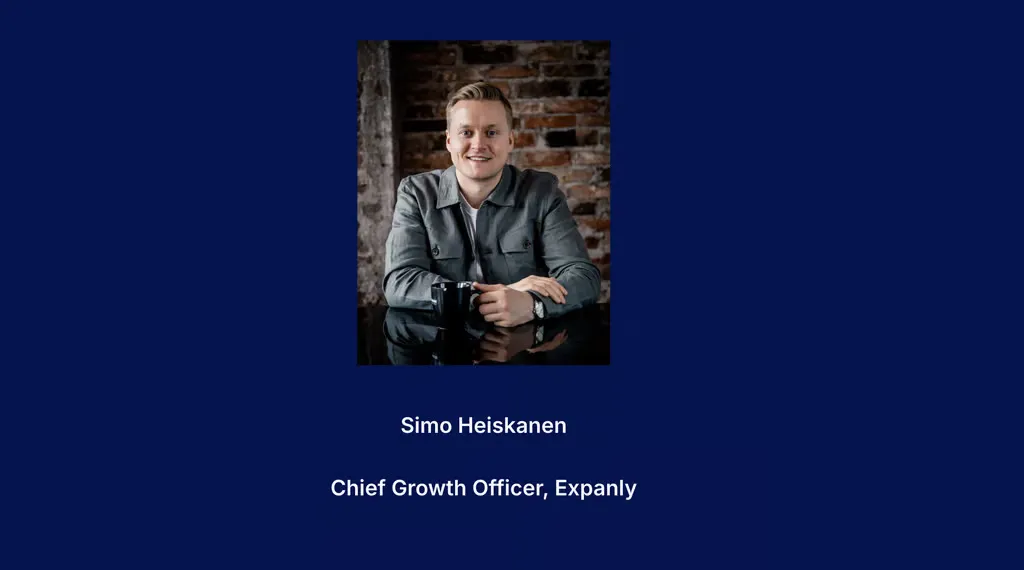

Michael Ovitz is the CEO and co-founder of Expanly. He started working in digital marketing in 2009 and later led marketing at Foodora Finland, Mehiläinen and Verkkokauppa.com, after years of helping companies from the agency side. Those roles put him in management meetings where advertising performance, commercial priorities and company profitability had to make sense together.
Expanly grew from a problem he kept seeing in those rooms: advertising platforms could optimize campaigns at enormous speed, but the business still lacked a practical way to tell them which products, categories and launches mattered now. We asked Michael how that experience shaped Expanly, what the company has learned since its first product and what retail leaders should expect from automation.
What problem were you trying to solve when Expanly started?
In my retail roles, I could explain the campaign numbers. I knew the ROAS, conversion rate and cost by campaign. The harder question was whether our advertising investment supported the commercial plan we had agreed for that month.
A retailer might want to launch a new collection, grow a strategic category or stop creating demand for products with weak stock. The advertising account can still favor established products because they have the strongest conversion history. The report looks healthy while the budget moves away from the plan.
That gap has become more visible as platforms have automated more of the execution. The specialist can run an excellent account and the platform can optimize exactly as designed, yet neither has a shared interface for the retailer's current commercial priorities. Expanly started with the idea that the business needed one.
How do you describe Expanly today?
Expanly is The Control Layer for Retail Growth: the business interface between retail strategy and marketing execution.
It brings catalog, commercial and advertising data into one shared priority model. A team can see where advertising investment goes, define Business Rules for products that should be High, Standard or Low priority, review the result and approve what gets published.
Google delivery is available today through Merchant Center. The approved priority becomes a label the paid marketing specialist can use in the campaign structure. Detailed margin, stock, return and rule data stays in Expanly; Google receives the approved priority label rather than the business data behind the decision. Supplemental Feed takes those same commercial priorities beyond Google, into Meta Ads and ChatGPT Ads.
We summarize the operating model as Discover, Define and Deliver. Discover where the opportunity or mismatch is. Define the commercial priority together. Deliver the approved signal into the existing advertising setup, then review what changed.
Why call it a control layer?
The name describes where Expanly sits. Retail strategy already exists, and so do Google Ads, Merchant Center, feed tools, analytics and the agency or in-house team running campaigns. We connect the decision made by the business with that execution layer.
Leadership can set direction. Ecommerce and category teams can express that direction as product rules. Paid marketing specialists still decide how campaigns, budgets and targets should be structured. Expanly maintains the approved product priorities and makes the allocation visible to everyone involved.
That separation matters. We do not manage the customer's ads or replace specialist judgment. The existing stack stays. The value comes from giving the people in that stack the same commercial brief.
What have you changed your mind about while building the company?
At first, we talked too much about giving an algorithm more data. The more important question is what decision the business wants to make with that data.
Margin, stock, returns, seasonality and product age can all matter. Putting every available field into one model does not create clarity. A useful rule needs an owner, a commercial reason and a point at which the team reviews whether it is still right.
We have also made approval more explicit. Automation is good at preparing, maintaining and evaluating product groups across a large catalog. The customer should still decide which change becomes active. That is now visible in both the product and our messaging.
What does better control look like in practice?
It starts with a report leadership can use. Instead of stopping at campaign totals, show how spend divided across the products the business marked High, Standard and Low priority. Then ask whether that allocation reflects the plan.
Scandinavian Outdoor offers a concrete example. After product priorities went live, the share of spend going to Low-priority products fell from 51% to 24%, while the High-priority share rose from 18% to 29%. Over the measured year-on-year period, PMax revenue was 32% higher and ROAS improved by 5.7%. The result mattered. So did the ability of their ecommerce and purchasing teams to review the allocation together, product by product. (Read the case study)
The weekly question becomes practical: are the products we chose receiving a fair share of investment, and what should we change next? Sometimes the right answer is a new rule. Sometimes it is a campaign change. Sometimes the result tells you to leave the setup alone.
Where does AI fit?
AI should shorten the path from a question to a reviewed decision. It can help a team examine connected data, find an unusual allocation, prepare a rule and follow the result. It should also show the evidence behind that suggestion.
Expanly AI is currently in invitation-only closed beta. The customer remains in the approval loop, whether a change is prepared in the Expanly interface or through an approved AI workspace. Its role is to give the business a useful interface for evidence and prepared actions. Google remains the optimizer.
How does the company itself work today?
We are a hybrid company with our headquarters in Helsinki and team members working across locations. The office gives us a place for the conversations that improve in person. Clear writing and deliberate documentation give people room to focus when they work elsewhere.
The principle underneath both modes is ownership. People should know which decisions they own, which ones need wider input and what outcome they are responsible for. That is also how we think about the product: clear decision rights make collaboration easier.
What keeps the work in perspective for you?
My family does. Building a company can make every problem feel urgent. Time with my wife and children is a good reminder that urgency and importance are different things.
It also shapes how I lead. My job is to give people enough context to make good decisions, then let them own the work. The same idea runs through Expanly: the people closest to the business should have the information and authority to decide what happens next.
What change do you want Expanly to make in retail?
I want advertising investment to become a normal part of the commercial conversation. A CEO, category manager, ecommerce lead, paid marketing specialist and agency should be able to look at the same allocation and discuss it in the language of the business.
Retailers already have strategy, capable teams and powerful advertising platforms. The missing piece is the interface that keeps those parts connected as priorities change. If Expanly makes that connection part of the weekly operating model, we will have built something useful.
See the team behind Expanly, read why PMax optimization reaches a ceiling without commercial context, or request a Free Audit to examine how your current budget is allocated.